
dummy
Kontakt
Kontakt
Aktuelles


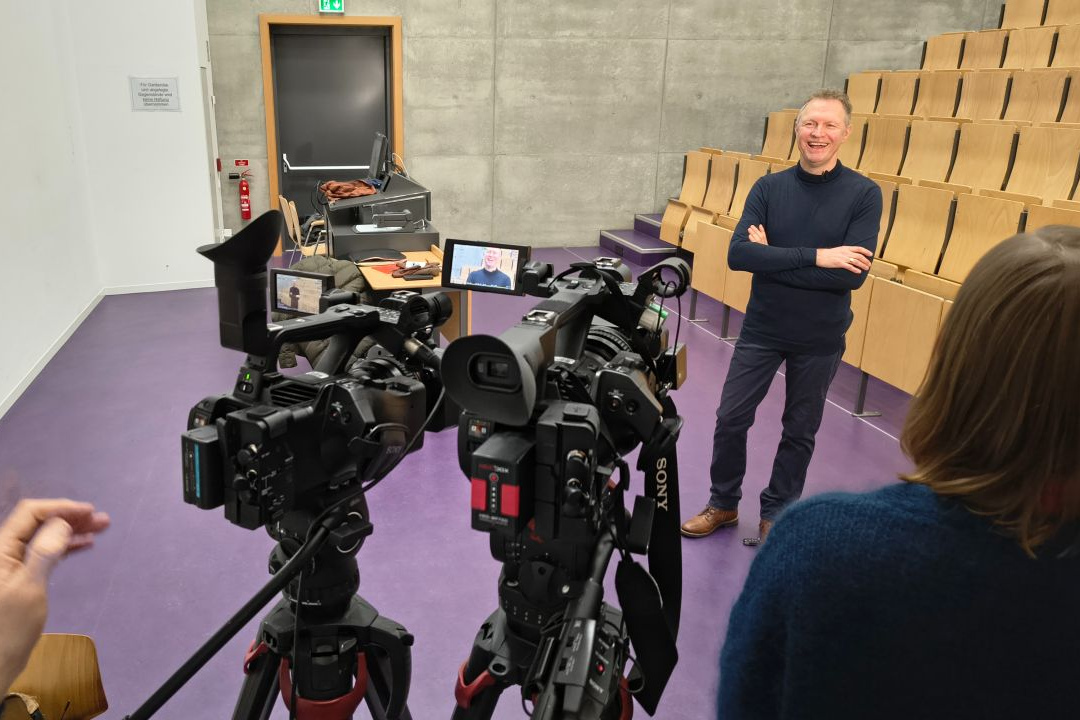

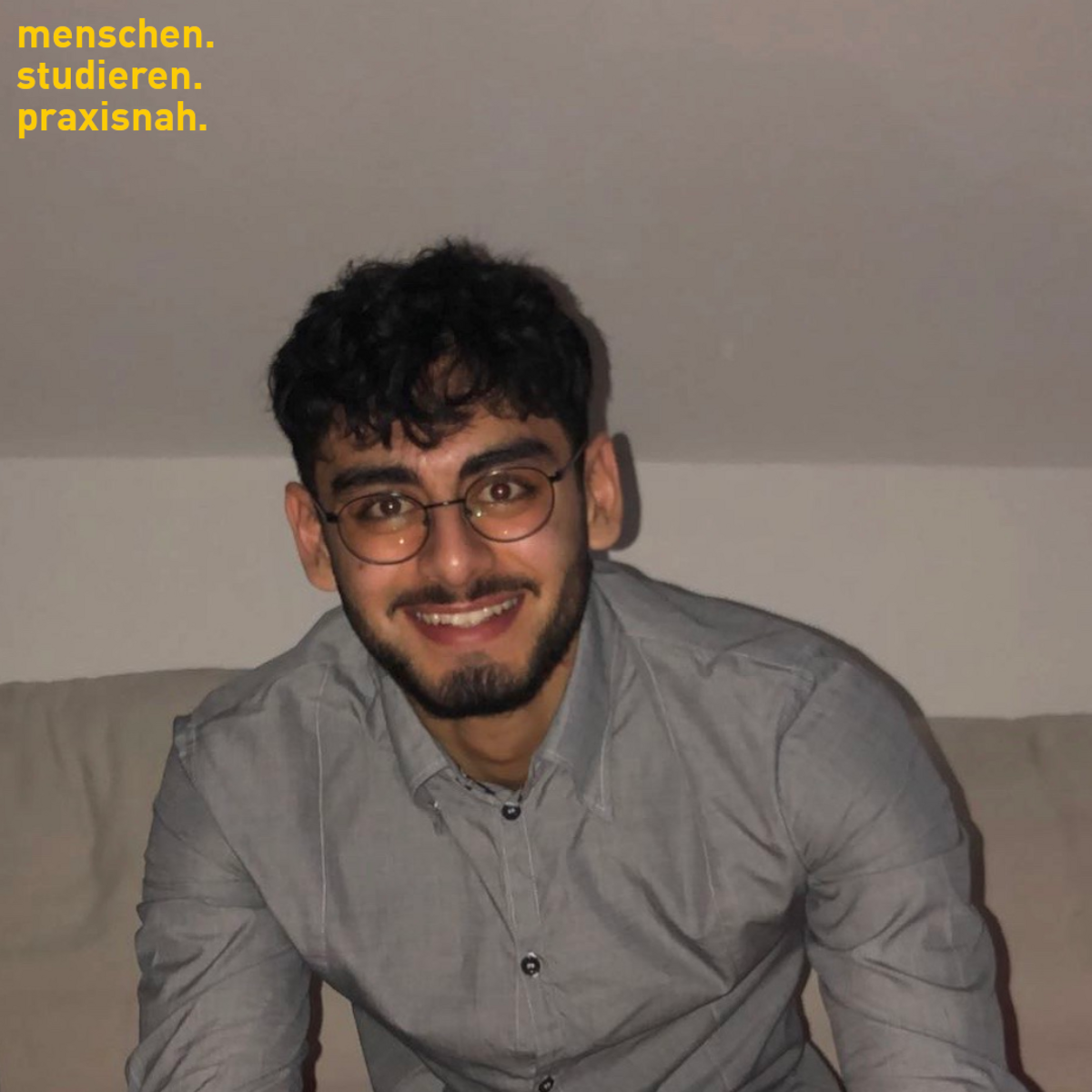
“I like SUK-classes...
in English because of the diversity in the group. Many of the students are internationals and come from all around the world, each one brings a different culture, a different perspective and different ideas, making us to get out of the box in each class. I not only get to learn something about emotional intelligence, emotions in social media, but about what can I expect from the work environment that gets more and more divers every day.”
Maria Carrillo - SUK: Digital Emotions by Prof. Döveling

I really enjoyed…
this class because Emotions is something everyone is able to relate to. In this course I especially enjoyed being in small groups with other people from around the world and getting to know them and their culture.
-Sonja Meisel

DIGITAL EMOTIONS …
has been a great choice for me. Thanks to teaching in English I have been able to learn in a multicultural environment. In addition to all this, the people who are part of this course take different degrees, so we debate from different points of view.
- Catuxa Botana
Study programm's
Here you can find the study programmes of the department. If you have any questions regarding stays abroad, please get in touch with the respective contact person of the study programmes.
The study. What is it about?
Enterprises and public administrations invest massively in education and professional training programs, in persuasive communication as well as in social trainings and health ads. Do these interventions work? There is a substantial demand for valid fact and detailed evidence. Young professionals in enterprises and non-profit entities need to bring two key competences to their tasks: the ability to assess and evaluate social interventions and innovations, and a solid understanding of professional practice in the workplace. At Hochschule Darmstadt – University of Applied Sciences – we train these young professionals!
Fields of practice: How will this degree support me professionally?
Graduates of the BA in Applied Social Sciences enjoy an extensive field of career opportunities, including but not limited to
- occupational and public health
- occupational and extra-curricular training and education
- human resources management
- marketing, public relations and online communication
- customer and stakeholder relations and management
- public space and public security
- development cooperation and international value chains
Modules: What’s the program’s structure?
The first two terms introduce a broad set of professionally relevant social sciences, including a first research project in collaboration with partners from business, administration, and NGOs. The third term holds basic courses in qualitative and quantitative social sciences as well as language and general education courses. The fourth and fifth terms focus on the development of professional core skills and on an advanced research project. The final sixth term is dedicated to a mandatory internship and the bachelor thesis.
For details, please check the course and module overview on the right.
Education. What is required?
Access to the B.A. program in Applied Social Sciences depends on academic credentials with the final grade of the school leaving certificate of a higher institution of secondary education having the strongest impact (numerus clausus system). Furthermore, applicants need to document English language skills (level B1).
Application and program start
Courses commence in October for the winter term; please prepare for an application deadline in May. For further information on degree studies, please refer to Hochschule Darmstadt‘s Student Service Center (SSC) or our International Office.
The study. What is it about?
Understanding, explaining and predicting the behaviour of people in business - this is what the six-semester bachelor's programme in Business Psychology enables students to do. The practice-oriented course of study is specifically tailored to fields of activity in business and society. During their studies, students learn a psychologically sound approach to economic issues - for example, how to promote the commitment of employees in a company. The students have the opportunity to specialize. Students can choose to specialize in one of the following areas: work, human resources and organization; market, consumers and media; or environment and sustainability.
Practice field. What can I do after my studies?
With their combination of psychological and business skills, business psychologists are in great demand on the job market. Graduates of the bachelor's programme will find excellent job opportunities in the following areas:
- Industrial, personnel and organisational psychology, for example in personnel and organisational development
- Market, consumer and media psychology, for example in market research and advertising
- Environmental psychology, for example in research institutions and governmental organisations
Modules: What’s the program’s structure?
The bachelor's programme in Business Psychology is divided into six semesters. In the first three semesters, the teaching of practice-oriented basics creates a general understanding of business psychology. In the fourth and fifth semesters, students choose their major fields of study. In addition to the subject-related courses, there are two-semester projects within the specialisations in which the students can directly apply the contents taught. In the last semester, the course of study concludes with a practical phase and the Bachelor thesis.
Education. What is required?
The Bachelor's degree in Business Psychology is admission restricted (NC). Among other things, these school-leaving qualifications are regarded as admission requirements: - general qualification for university entrance - in Hessen valid subject-related qualification for university entrance - in Hessen valid qualification for admission to a university of applied sciences English language skills are required as well as an interest in economic and psychological topics.
Application and program start
The program begins in the winter semester. All information on the application procedure is available on the Internet at www.h-da.de/bewerbung. For further information on degree studies, please refer to Hochschule Darmstadt‘s Student Service Center (SSC) or our International Office.
The study. What is it about?
The six-semester Bachelor's programme "Information Law" offers a practice-oriented and scientifically sound legal education tailored to the extrajudicial processing of information law tasks. The focus is on questions from the fields of IT and media law, intellectual property law and the law of electronic administration. European and Anglo-American law is a focal point. Small classes of about 60 students allow for optimal supervision. The graduates should be qualified and specialized lawyers in the respective special subjects for the field of information law and yet differ from the classic fully-qualified lawyers in their understanding of other disciplines from the information technology and business environment. You can find more detailed information on the course of studies on the website of the Information Law course of studies.
Structure
The modules of the Information Law course provide the necessary qualifications and competences. The curriculum includes seminars and project work. The illustration on the right provides an overview. A detailed presentation of the course contents can be found in the module handbook. The Bachelor's degree qualifies students for a profession, but also enables them to transfer to Master's degree programmes. The study programme is accredited by the AQAS agency. It bears the seal of approval of the Accreditation Council.
Prospects
Information lawyers are active in the following areas (selection):
- Software distribution (license agreements)
- Copyright law, data protection law, social media
- e-commerce (e.g. online shops, online auction houses)
- Publishing houses and music publishers
- Film productions, television, telephony via the Internet
- Brand management in companies, law firms
Building on the Bachelor's degree, the following Master's programmes are possible:
International Licensing Law - Master of Laws
Education. What is required?
The Bachelor's programme in Information Law is admission restricted (NC). Among other things, these school-leaving qualifications are regarded as admission requirements:
- general qualification for university entrance
- subject-related higher education entrance qualification valid in Hessen
- advanced technical college entrance qualification valid in Hessen
Enrolment requires proof of English language skills at level B1. This can be documented either by the Abitur or the Fachabitur certificate. Alternatively, various language certificates are recognised.
Application and program start
The bachelor's programme in Information Law is an NC-programme with 60 places, for which you can apply for the winter semester. The application formalities and deadlines can be found on the website of the Hochschule Darmstadt: h-da.de/application
The study. What is it about?
The application-oriented four-semester Master's programme provides training for all questions of licensing law in the broadest sense in science and - primarily - in practice. It provides in-depth knowledge of contract and case law from IT and IP law as well as the related questions of international, in particular Anglo-American law. In addition, there is a considerable amount of internationalisation, which meets the needs of communication across national borders as well as communication at the interfaces of technology and law. With the specialization of license management in the international environment, a demanding and demand-oriented orientation is offered, which has not been available on the market in this way before.
Practice field. What can I do after my studies?
The course of study is oriented towards the upper employer market in internationally active companies in the IT and media industry, for example in legal departments or in more complex project, contract and licence management. Public institutions that use electronic administrative procedures (e-government) and thus touch on licensing issues are also eligible.
Further career prospects:
- higher starting salary and access to management positions
- Possibility of a subsequent doctorate
Modules: What’s the program’s structure?
The modules of the Master's programme International Licensing Law provide the necessary qualifications and competences. The curriculum includes seminars and project work. The illustration on the right provides an overview. It also lists the access possibilities to the course of studies.
Education. What is required?
The regular admission requirement for the Master's program is a qualified diploma or bachelor's degree in the Information Law program of the Darmstadt University of Applied Sciences or a diploma or bachelor's degree in a field of law acquired at another university, the suitability of which has been recognized by the examination board, or a first state examination in law. The language of instruction of the course of studies is partly English.
Application
The application formalities and deadlines can be found on the website of the Hochschule Darmstadt: h-da.de/application
The study. How is the Master's degree structured?
How can risks and opportunities be assessed and, on this basis, how can proactive sustainability management be designed? These questions are the focus of the four-semester Master's programme "Risk Assessment and Sustainability Management" (RASUM). The starting point is the growing challenges facing companies in all sectors that want to integrate the guiding principle of "sustainable development" into their strategy. This is why employees who are able to combine scientific-technical with organizational and economic perspectives are in demand. In interdisciplinary teams, students learn to deal with risks and opportunities in a systematic and structured way and to use the methods and instruments available to them. In this way, they are able to unleash an organization's creative potential for proactive sustainability management and initiate the necessary change processes. RASUM imparts analytical and strategic skills that allow to cross supposed system boundaries and to integrate social psychological and social aspects. With its combination of risk analysis and sustainable development, RASUM is unique in the German university landscape. Teaching is conducted in German and English.
Practice field. What professional opportunities are opening up?
With the professional orientation of RASUM, there are good opportunities on the job market in view of the great social challenges. The course qualifies students for the following career options, among others:
- in management positions in companies
- in risk management for process and product innovations
- in strategic management and business consulting
- in the development of new products and services
- in the area of governance, risk management and compliance
- in public administration (higher service)
- as project leader in large, interdisciplinary research projects and in scientific policy advice
Modules: What’s the program’s structure?
Competencies for these fields of activity are conveyed in lectures and seminars as well as in the transdisciplinary project studies offered over two semesters.
Education. What is required?
The programme has special admission requirements:
It is aimed primarily at:
- Graduates of technical subjects with a good basis in business administration or
- business-related subjects with good basic knowledge in engineering sciences or technical subjects
Graduates of other subjects can (informally) submit an application for individual case assessment. Relevant practical experience is an advantage. Admission is based on a determination of aptitude. In case of lack of business management knowledge, admission with conditions is possible.
Fachbereichssekretariat
Kommunikation
Haardtring 100
64295 Darmstadt
Büro: A12, 322
+49.6151.533-68731
gisa.bengel@h-da.de
sekretariat.suk.fbgw@h-da.de